Fetal Monitoring Market Size, Share, Demand, Growth Analysis Report 2032

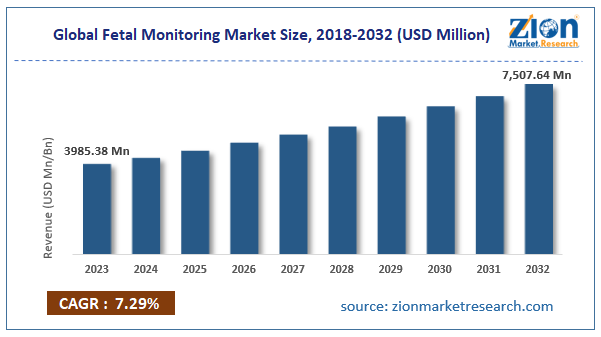
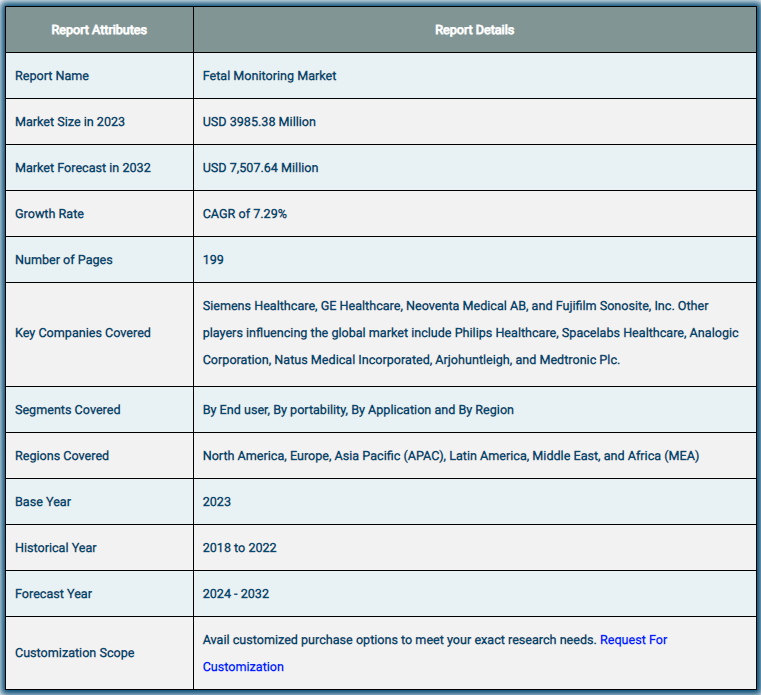
The global fetal monitoring market was estimated to be worth USD 3985.38 million in 2023 and is expected to grow to USD 7,507.64 million by the end of 2032, according to a report released by Zion Market Research. Over the course of the projection period, the market is anticipated to rise at a CAGR of 7.29%.
✈👉Get a Free Sample: 🚀https://www.zionmarketresearch.com/sample/fetal-monitoring-market
Introduction:
- Overview of Fetal Monitoring:
Introduce fetal monitoring as a critical component of prenatal care, aimed at assessing the health and well-being of the fetus during pregnancy. This includes techniques such as electronic fetal monitoring (EFM), ultrasound, and fetal heart rate monitoring. - Importance of the Market:
Highlight the significance of the fetal monitoring market in improving maternal and fetal health outcomes, reducing complications during pregnancy and childbirth, and enhancing clinical decision-making.
Overview of the Global Fetal Monitoring Market
The fetal monitoring system is a diagnostic tool that tracks the fetus’s heart rate, movement, and mother’s contractions. It is an essential tool for keeping track of uterine contractions during childbirth. It mostly keeps an eye on the fetus’s health and the development of labor. It is known as the medical procedure to assess the health of a fetus in order to guarantee a safe delivery. It is also used to monitor jaundice, mental retardation, chronic lung ailments, newborn illnesses, hypothermia, and issues with vision and hearing.
Growth Factors for the Global Fetal Monitoring Market
The expansion of the worldwide fetal monitoring market is expected to be driven by the rise in demand for fetal monitoring during pregnancy. Future global market expansion is anticipated to be driven by advances in technology as well as an increase in preterm births and birth rates. Furthermore, an increase in the rate of hemorrhages, premature deliveries, and the demand for fetal monitoring supplements could potentially benefit the worldwide industry. In addition, the rise of wireless and portable goods and technologies, along with the unexplored potential of emerging economies, have created avenues for profitable worldwide expansion. On the other hand, strict regulations, low birth rates, and expensive equipment could hinder the growth of the worldwide fetal monitoring market.

Market Segmentation for Global Fetal Monitoring
Fetal monitoring markets around the world are divided into segments according to end users, mobility, applications, and regions. Fetal monitoring market segments have all been examined in light of current and anticipated trends, and the market is projected to grow between 2024 and 2032.
Considering the End User,Based on the end user, the worldwide fetal monitoring market is segmented into clinics, hospitals, and other establishments.
The global market is divided into two categories: non-portable and portable, based on portability.
The antepartum and intrapartum fetal monitoring segments of the global fetal monitoring market are further divided based on application. Furthermore, the worldwide market is divided into non-invasive and invasive categories based on technology. Additionally, devices & consumables software is the basis for segmenting the worldwide fetal monitoring market.
✈👉Directly Purchase a copy of the report with TOC: 🚀https://www.zionmarketresearch.com/toc/fetal-monitoring-market
Market for Fetal Monitoring: Report Extent
Regional Analysis of the Global Fetal Monitoring Market
Because of rising healthcare awareness and rising disposable income, Asia Pacific leads the worldwide fetal monitoring market, and this trend is expected to continue. Furthermore, because of their vast populations and greater number of hospitals, India and China offer more potential as markets. Another location that is expanding rapidly is North America. It is regarded as one of the areas where the global market for fetal monitoring generates the most money.
Improved reimbursement practices, growing patient awareness, and technical developments in this area are anticipated to fuel the expansion of the worldwide market in the near future. Moreover, rising per capita income, encouraging government initiatives for healthcare infrastructure development, and ongoing infrastructure development are the main drivers of the worldwide fetal monitoring market’s expansion.
Market Drivers:
- Rising Prevalence of High-Risk Pregnancies:
An increase in high-risk pregnancies due to factors like advanced maternal age, obesity, and chronic health conditions is driving demand for advanced fetal monitoring solutions. - Technological Advancements:
Continuous innovations in fetal monitoring technologies, including wireless monitoring systems and telemedicine solutions, are enhancing patient care and accessibility. - Growing Awareness of Maternal and Fetal Health:
Increased awareness and education regarding the importance of fetal monitoring during pregnancy are propelling market growth. - Government Initiatives and Healthcare Expenditures:
Rising healthcare spending and government initiatives aimed at improving maternal and child health are fostering the adoption of fetal monitoring solutions.
Market Restraints:
- High Cost of Advanced Fetal Monitoring Devices:
The high price of sophisticated fetal monitoring systems may limit access for smaller healthcare facilities and low-resource settings. - Lack of Skilled Healthcare Professionals:
A shortage of trained personnel to operate and interpret the results from fetal monitoring devices can hinder market growth. - Data Privacy and Security Concerns:
Concerns over data privacy and the security of patient information may impact the adoption of electronic fetal monitoring solutions.
Market Segmentation:
- By Product Type:
- Fetal Monitors:
- Continuous Fetal Monitors: Used in hospitals for continuous monitoring during labor.
- Portable Fetal Monitors: Designed for use in home settings or outpatient clinics, offering flexibility and convenience.
- Ultrasound Devices:
- 2D Ultrasound: Commonly used for routine checks during pregnancy.
- 3D/4D Ultrasound: Provides more detailed imaging for better fetal assessment.
- Fetal Dopplers: Handheld devices used to listen to the fetal heartbeat.
- By Technology:
- Electronic Fetal Monitoring (EFM): Continuous monitoring of fetal heart rate and uterine contractions during labor.
- Wireless Fetal Monitoring: Emerging technology that allows for monitoring without the constraints of wires, improving mobility for patients.
- By Application:
- Labor and Delivery: Monitoring fetal heart rate and maternal well-being during childbirth.
- Prenatal Care: Monitoring fetal health during routine check-ups throughout pregnancy.
- By End-User:
- Hospitals: The largest end-user segment, utilizing advanced fetal monitoring systems for labor and delivery.
- Clinics: Outpatient facilities that offer prenatal and postnatal care.
- Home Healthcare: Increasing adoption of portable fetal monitoring devices for home use.
Regional Insights:
- North America:
The largest market, driven by advanced healthcare infrastructure, high prevalence of high-risk pregnancies, and a strong focus on maternal health. - Europe:
A significant market characterized by increasing healthcare spending and growing awareness of fetal monitoring. Countries like Germany and the U.K. are leading in market growth. - Asia-Pacific:
The fastest-growing region, fueled by rising healthcare expenditures, increasing access to maternal healthcare services, and a growing population. Countries like China and India are witnessing rapid adoption of fetal monitoring technologies. - Rest of the World (RoW):
Examine market dynamics in regions like Latin America, the Middle East, and Africa, where improving maternal and child healthcare is becoming a priority.
Competitive Landscape:
- Key Players:
Discuss leading companies in the fetal monitoring market, such as GE Healthcare, Philips Healthcare, Siemens Healthineers, and others. Highlight their product portfolios, market strategies, and recent developments. - Product Innovations and Collaborations:
Emphasize recent advancements, product launches, and partnerships that enhance the capabilities of fetal monitoring devices.
Future Outlook and Trends:
- Integration of AI and Machine Learning:
Explore how AI and machine learning are being incorporated into fetal monitoring systems to improve predictive analytics and decision-making. - Increasing Focus on Remote Monitoring:
The rise of telehealth and remote patient monitoring is expected to drive demand for portable and wireless fetal monitoring solutions. - Emphasis on Patient-Centric Care:
The trend towards personalized and patient-centered healthcare is likely to influence the development of more intuitive and user-friendly fetal monitoring systems. - Sustainability Initiatives:
Growing awareness of environmental issues may lead manufacturers to develop eco-friendly and sustainable fetal monitoring products.
Conclusion:
Summarize the key trends and growth opportunities in the fetal monitoring market, emphasizing drivers such as technological advancements, increasing awareness of maternal health, and rising healthcare expenditures. Highlight the potential for growth in emerging markets and the importance of addressing challenges related to cost and skill shortages.
✈👉Enquiry for buying: 🚀https://www.zionmarketresearch.com/inquiry/fetal-monitoring-market
get to know better
Contactless Biometrics Technology Market
Contact Us:
Zion Market Research212
USA/Canada Toll Free: 1 (855) 465–4651
Newark: 1 (302) 444–016611\
Web: https://www.zionmarketresearch.com/
Blog: https://zmrblog.com/


Comments
Post a Comment